
In this article
Most Canadians think of winter travel as a chance to get somewhere warm. But Europe's cities make a strong case for heading the other way. From late November, Christmas markets fill historic squares, and after the holidays the summer crowds are long gone. Museums are quieter, cafés feel cosier, and a light dusting of snow makes old town streets look their best.
Here are a few cities worth considering, along with tips for planning a winter trip from Canada.
Luxembourg City, Luxembourg
Luxembourg's capital is small, walkable and full of history, with a UNESCO-listed old town and centuries-old fortifications above deep green valleys. From late November to early January, the Winterlights festival brings Christmas markets, lit streets, live performances and an outdoor skating rink. Try the local potato fritters at the market stalls, then explore the Bock Casemates, a network of tunnels carved into the rock. Public transport across Luxembourg is free, which makes getting around easy.
Lucerne, Switzerland
Lucerne pairs a painted old town with a lake backed by snowy peaks. In December, lights and decorated trees line the waterfront and the squares. For a day trip, head up Mount Rigi, the "Queen of the Mountains," for snowy trails and wide Alpine views. In the village of Rigi Kaltbad, warm outdoor mineral baths look out over the mountains, a welcome contrast to the cold air.
Bruges, Belgium
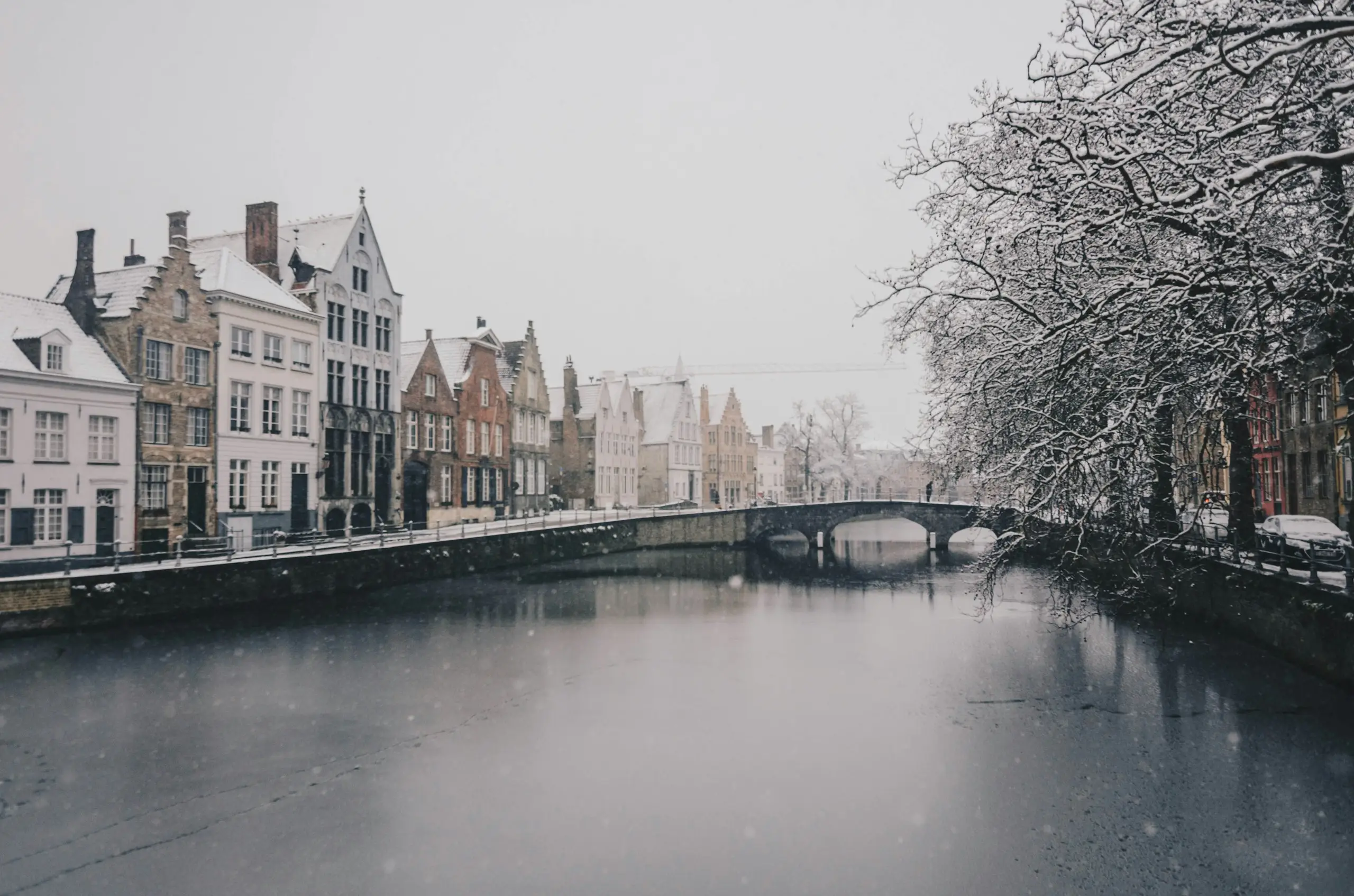
With its canals and medieval gabled houses, Bruges looks made for winter. It's compact enough to explore on foot in a day or two, and chocolate shops on almost every corner give you a good reason to keep stepping inside to warm up. It also pairs easily with a stop in Brussels or Ghent.
Paris, France
Paris in winter means shorter lines at the big museums and a slower pace in the cafés. The holiday lights along the grand boulevards are a highlight in December, and January brings the city's winter sales. It's also one of the easiest European cities to reach from Canada, which makes it a good starting point for a longer trip.
Tips for planning a winter trip to Europe
Choose your timing. If the Christmas markets are the draw, aim for late November to the end of December. If you'd rather have fewer crowds and lower demand, January to early March is often quieter.
Plan for short days. Daylight is limited in northern Europe in winter, so plan outdoor sightseeing for the middle of the day and save museums, markets and long dinners for the evening.
Pack like a Canadian. You already know how to dress for winter. Waterproof boots with good grip matter on cobblestones, and layers help when you're moving between cold streets and warm indoor spaces.
Combine cities by train. Europe's rail network makes it easy to see two or three cities on one trip. Fly into one city and out of another to avoid backtracking.
Check entry requirements. Europe's entry rules for visitors have been changing. Check the latest requirements for each country on your route before you go.
A sample one-week itinerary
For a first winter trip, try flying into Paris and spending three nights there, then taking the train to Brussels and spending two nights in Bruges before flying home from Brussels. If you prefer mountains, combine Lucerne with Zurich instead. Either route keeps travel time short and gives each city room to breathe. Leave one evening free in each place for a Christmas market or a long dinner, which often turns out to be the highlight.
Budget a little extra time at the start of the trip too. Overnight flights from Canada usually land in the morning, so a slow first day helps everyone adjust.
Start planning
A winter city break in Europe makes a nice change from the usual beach week. Look up flights to Europe, compare hotels across Europe near the old towns and markets, or browse our France travel deals for ideas.
Frequently asked questions
When are Europe's Christmas markets open?
Most run from late November through December, and some continue into early January. Dates vary by city, so check before you travel.
Is winter a good time to visit Europe?
Yes, if you don't mind the cold. After the holidays, cities are quieter, museums have shorter lines and hotels are often easier to find.
What should I pack for Europe in winter?
Waterproof boots with good grip for cobblestones, warm layers, a hat and gloves, and a compact umbrella.
- europe
- winter travel
- christmas markets
- city break